
The Check-Raise: A Complete Guide to Poker’s Sharpest Weapon
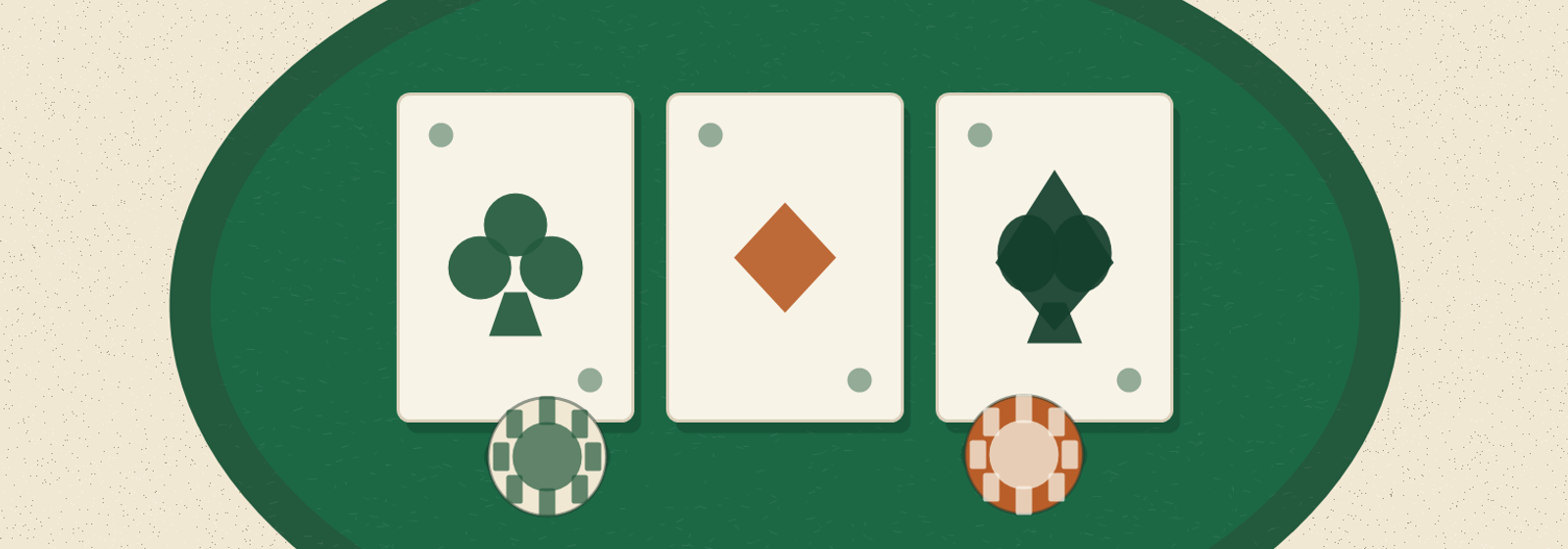
There is no faster way to swing the momentum of a hand than to check, look weak, and then raise into a bet. The check-raise turns the betting lead against the player who took it, and when you build it correctly, it is one of the highest-pressure plays in no-limit hold’em.
What a check-raise actually does
A check-raise happens when you check, an opponent bets, and you respond by raising rather than calling or folding. The move only exists out of position: you have to act first to check, then act again after the bet comes in.
Mechanically it is simple. Strategically it does two things at once that no other line does:
- It charges maximum. When you have a strong hand, calling lets the pot stay small. Check-raising adds a second betting unit on top of your opponent’s bet, growing the pot the moment it is most lopsided in your favour.
- It seizes the lead from someone who thought they had it. A bettor is usually telling a story about strength. Raising back forces them to defend their whole continuation-bet range against a line that screams a made hand.
The reason it is so powerful, and so abused, is that it works with two completely different kinds of hands: premium value and well-chosen bluffs. The art is mixing them so an opponent can never tell which one you hold.
Value check-raises: the half you fold around
A value check-raise is straightforward. You flop a hand strong enough to want two or three streets of money in, and you check to let your opponent bet first so you can raise on top.
Say you defend your big blind with 8♥7♥ and the flop comes 9♠8♣7♦. You have bottom two pair on a board that smashes a button raiser’s continuation-bet range. Checking is correct: you induce a bet from all their overcards, gutshots, and big pairs, then raise to build a pot while you are crushing most of what bets. The same logic applies to sets, straights, and the occasional top pair with a strong kicker on a draw-heavy board where you want to deny equity now rather than slow-play.
The key filter for the value side: would you be happy getting raised back? If your hand is strong enough to continue against a 3-bet, it belongs in your check-raising range. If it is the kind of hand that wants a cheap showdown, say, a thin middle pair, it usually prefers to check-call or check-fold instead. For a refresher on what beats what when these spots go to showdown, see poker hand rankings.
Bluff check-raises: the half that makes the play unbeatable
Here is the part most players skip, and it is the entire reason the check-raise works. If you only ever check-raise the nuts, a thinking opponent simply folds everything but their best hands and you win a small pot at best. Your value gets no action because your line is transparent.
The fix is to add bluffs that have a reason to keep firing, hands with equity, blockers, or both. Strong candidates:
- Flush and straight draws that can barrel turns and rivers, and that win the pot outright when they hit.
- Backdoor combinations on the flop that pick up more outs by the turn.
- Hands that block your opponent’s continues: for instance, holding the A♠ on a spade-flush board, which removes the nut flush from their calling range.
The goal is a roughly balanced bundle: enough bluffs that your value hands get paid, but not so many that you are turning a profit away. A common practical reference point is something near a 2-to-1 value-to-bluff ratio on the flop, loosening as more cards come, but treat that as a guideline for thinking about balance, not a fixed number to count to at the table. The deeper logic behind these ratios lives in GTO poker.
Boards and ranges that favour the check-raise
The check-raise is not equally good on every flop. It thrives where the board hits your range, the caller’s, harder than it hits the original raiser’s.
| Board texture | Example | Check-raise frequency | Why |
|---|---|---|---|
| Low, connected | 7♦6♦5♣ | High | Hits the big blind’s calling range; raiser’s overpairs are vulnerable |
| Middling two-tone | 9♠8♠4♥ | Moderate–high | Plenty of two-pair, sets, and live draws for the defender |
| Ace-high dry | A♣7♦2♠ | Low | Belongs to the raiser; few strong hands and few good draws for you |
| Broadway | K♥Q♣J♦ | Low–moderate | Raiser holds more of the top combos; pick spots with blockers |
The pattern: check-raise more on low and connected boards that favour the defender’s range, and far less on ace-high and broadway boards the preflop raiser is supposed to own. On those high, dry flops a check-raise is so obviously strong that observant opponents fold everything you wanted to beat. Position shapes all of this, see position in poker for why the out-of-position player leans on this tool in the first place.
Sizing and the tells that give you away
Sizing. A flop check-raise to roughly 2.5x–3.5x the bet you faced is standard. Go larger on wet boards where you are charging draws and want to deny equity; you can go slightly smaller on dry boards where you are mainly targeting a specific part of their range. The one rule that matters: your value raises and your bluff raises must use the same size. The instant your bluffs are smaller (scared) or larger (greedy) than your value, a competent opponent reads you for free.
The tells that leak. Most exploitable check-raisers are readable for one reason, they only ever do it with the nuts. Watch for these in yourself:
- No bluffs. If every check-raise you make is a set or better, you are a face-up player. You will win tiny pots and never get paid on the big ones.
- Size that tracks strength. Big with monsters, small with air. Pick one size and hold it.
- Timing tells. A long pause then a raise, or a snap check-raise, both broadcast information. Keep your tempo even. For the broader skill of spotting and hiding these, study reading poker tells.
- Spot selection. Only ever check-raising scary boards, never your own good boards, is itself a pattern.
If you want to pressure-test your check-raising ranges hand after hand and see exactly where they are unbalanced, a trainer like DeepFold lets you drill these spots until the value-and-bluff mix becomes automatic.
Putting it together
A great check-raise is never one hand, it is a range. Build it on boards that favour you, pair your value hands with draws and blockers that can keep barrelling, and use one consistent size for both. Do that and your opponents are stuck guessing on every street. Skip the bluffs and you become the easiest kind of player to face: the one who only raises with the nuts.
Frequently Asked Questions
What is a check-raise in poker?
A check-raise happens when you check, an opponent bets, and you respond by raising rather than calling or folding. It only exists out of position, because you must act first to check and then act again after the bet comes in.
Which hands should I check-raise for value?
Check-raise for value with hands strong enough to want two or three streets of money in, such as two pair, sets, and straights, plus the occasional strong top pair on draw-heavy boards. The key filter is whether you would be happy getting raised back: if your hand can continue against a 3-bet, it belongs in your check-raising range.
Why should I add bluffs to my check-raising range?
If you only check-raise the nuts your line is transparent, so thinking opponents fold everything but their best hands and your value never gets paid. Adding bluffs with equity or blockers, like flush and straight draws or backdoor combinations, balances the play so your value hands get action.
What sizing should I use for a check-raise?
A flop check-raise to roughly 2.5x to 3.5x the bet you faced is standard, going larger on wet boards to charge draws and slightly smaller on dry boards. The one rule that matters is that your value raises and bluff raises must use the same size, or a competent opponent reads you for free.
Keep learning
Overbetting: When Betting More Than the Pot Prints Money
Overbets pressure capped ranges and maximize value with the nuts. Which boards and ranges allow overbets, and how not to overuse them.
Read lesson →
Semi-Bluffing: How to Bluff With a Hand That Can Still Win
A semi-bluff bets a drawing hand that can improve, combining fold equity with outs. When to fire, which draws qualify, and how to size it.
Read lesson →
Slow Playing in Poker: When Trapping Actually Wins More
Slow playing can double your value or cost you the pot. When to trap with a monster, when to bet, and the board textures that make slow playing a mistake.
Read lesson →